

Fun Ways Preschoolers Learn Math Every Day
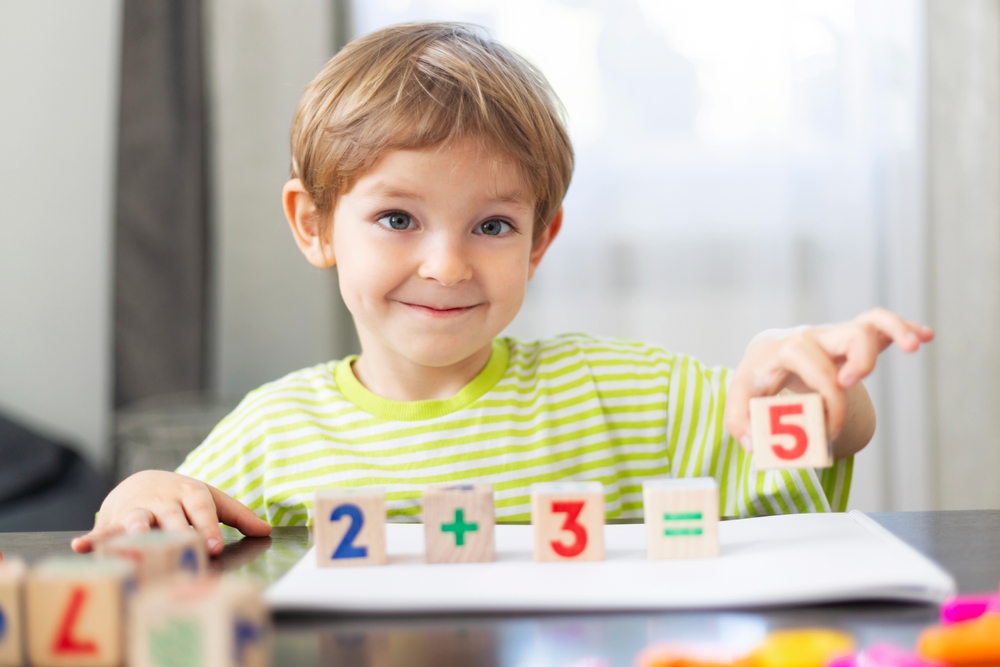
Math is not something that only happens at a school desk with a pencil and paper. For the youngest learners, math is woven into nearly every moment of their day, from counting crackers at snack time to sorting toys by color before bed. Parents and educators who understand this can create rich, meaningful learning experiences without any formal instruction at all. Preschool education is most effective when it meets children where they are, turning the ordinary world into an endlessly fascinating classroom.
The good news is that helping a preschooler build a strong math foundation does not require a curriculum, a whiteboard, or a timer. It simply requires attention, creativity, and a willingness to see the math that is already everywhere.
Counting Through Play and Daily Routines
One of the most natural ways preschoolers encounter math is through counting, and this happens organically throughout the day. When a child sets the table and places one fork next to each plate, they are practicing one-to-one correspondence, a foundational math skill. When they climb the stairs and count each step aloud, they are reinforcing number sequences in a way that feels like pure fun rather than learning.
Play is an especially powerful vehicle for counting. Building with blocks invites children to count how many they used or how tall their tower is. Board games with dice give children repeated practice at recognizing quantities and moving a set number of spaces. Even a simple game of hide-and-seek, where the seeker counts to ten or twenty, makes number sequences feel exciting and purposeful.
Preschool education specialists consistently emphasize that repetition is key for young learners, and daily routines provide exactly that. Counting how many steps it takes to walk to the mailbox, how many bites are left on the plate, or how many buttons there are on a shirt gives children dozens of low-stakes counting opportunities every single day. These brief moments accumulate into a surprisingly solid number sense over time.
Sorting and Classifying Everything in Sight
Before children can understand addition or subtraction, they need to understand that objects have properties and that those properties can be used to organize the world. Sorting is the skill that builds this understanding, and preschoolers are naturally drawn to it.
A child who separates their toy cars from their toy animals is engaging in classification. A child who lines up crayons from shortest to tallest is exploring measurement and order. A child who decides that all the red blocks go in one pile and all the blue blocks go in another is practicing categorization, a concept that underpins much of later mathematical thinking.
Everyday life is full of sorting opportunities that feel completely natural. Laundry time becomes a math lesson when children sort socks into pairs or separate light-colored clothing from dark. Grocery trips offer chances to group fruits together, compare sizes of produce, or count how many items go into the cart. Strong preschool education programs recognize that these moments are just as valuable as any structured activity because they connect mathematical thinking to real-world purpose.
Exploring Shapes and Spatial Reasoning
Geometry often surprises parents when it appears on a list of preschool math skills, but spatial reasoning begins developing very early. When a toddler struggles to fit a square block into a round hole, they are doing geometry. When a preschooler arranges puzzle pieces and rotates them to find the right fit, they are building spatial intelligence that will later support skills in engineering, art, and even reading comprehension.
Shapes appear everywhere in a child’s environment. Pointing them out during a walk, a drive, or a trip to the grocery store makes spatial learning feel like a scavenger hunt. Windows are rectangles. Stop signs are octagons. Pizza slices are triangles. Wheels are circles. These simple observations, repeated across many different contexts, help children build a rich visual vocabulary for describing the world.
At home, activities like building with magnetic tiles, playing with clay, or even arranging food on a plate can develop spatial skills. Drawing maps of the backyard, building forts with blankets, and navigating obstacle courses all engage spatial reasoning in ways that feel like pure imaginative play. Preschool education that intentionally incorporates spatial activities sets children up for stronger performance in math throughout their school years.
Measuring with Hands, Feet, and Cups
Formal measurement tools like rulers and scales come later, but the concept of measurement begins long before preschool is over. Young children are naturally curious about size comparisons, and this curiosity can be channeled into rich mathematical exploration.
Cooking and baking are classic measurement activities that preschoolers love. Pouring one cup of flour, adding two teaspoons of baking powder, and watching the batter rise introduce children to the idea that amounts matter and that precise quantities produce reliable results. Even if a child is not yet reading the numbers on a measuring cup, they are absorbing the concept that math is a tool for getting things right.
Nonstandard measurement is a wonderful entry point for very young children. How many of your handprints wide is the kitchen table? How many steps does it take to get from the front door to the couch? How many cups of water fill the big pot? These questions invite preschoolers to measure using their own bodies or familiar objects, which makes the abstract concept of measurement feel concrete and personal. Preschool education research shows that children who engage in nonstandard measurement activities develop a stronger intuitive sense of proportion and quantity.
Using Stories and Songs to Build Number Sense
Children’s brains are wired for narrative and music, and educators have long understood that weaving math into stories and songs is one of the most effective strategies for early learning. Number rhymes, counting songs, and math-themed picture books give children repeated exposure to mathematical ideas within a structure that feels joyful rather than instructional.
Classic songs like “Five Little Monkeys” and “Ten in the Bed” introduce subtraction through storytelling. Books that count forward and backward, compare sizes, or follow a character through a pattern-filled adventure make abstract ideas tangible. When a child hears the same number concepts in a song, then sees them illustrated in a book, then encounters them again during a game, those concepts begin to feel like reliable truths rather than isolated facts.
Parents do not need a background in early childhood education to use this approach. Reading aloud together every day and choosing books that include counting, patterns, or size comparisons is a powerful form of preschool education that happens right at home. Narrating daily activities in a math-rich way, “We need three more napkins because there are three people at the table,” builds vocabulary and number sense simultaneously.
Conclusion
Math learning in the preschool years does not look like worksheets or memorization drills. It looks like counting steps, sorting laundry, measuring flour, building towers, and singing silly songs. When caregivers and educators embrace the math hidden inside everyday moments, children absorb foundational skills in the most natural and lasting way possible. Strong preschool education is built on exactly this kind of engaged, playful curiosity.
Need a Child Educational Center in Greenwood, IN?
Established in 2017, we here at Kids Kingdom Early Learning Center are a child care and learning center located in Greenwood, Indiana. We specialize in providing a variety of services including daily nondenominational Christian education, before care and aftercare services, Paths to QUALITY™ Level 3 provider, On My Way Pre-K Provider, director-led weekly Bible learning time, military discounts, available through NACCRRA, Kindergarten readiness, CCDF provider, and more for children from newborn to 6 years old. As a family-owned and operated business, we value providing Christian education and quality services. Contact us for more information or come visit us today!